12. The Mental Health of Black Men: Beyond the Expectations of Strength and Resilience
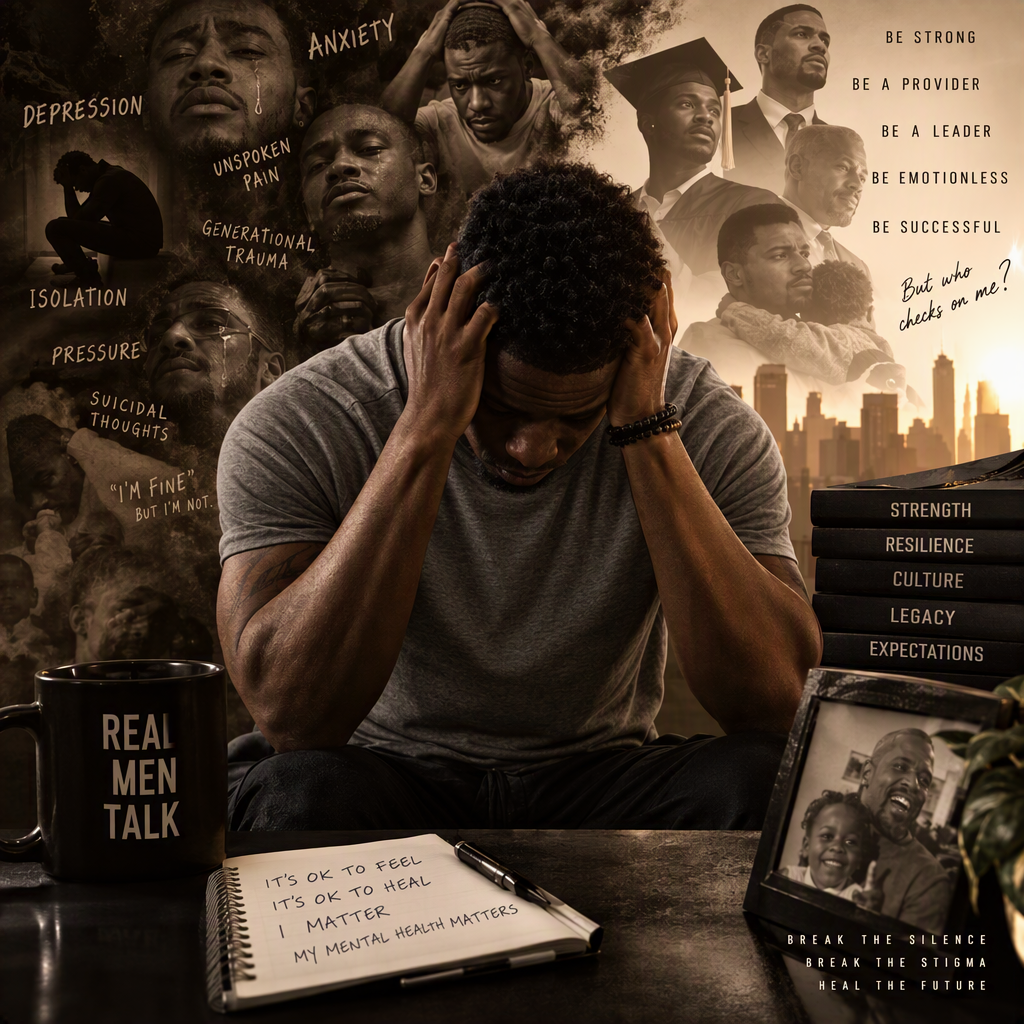
Beyond the expectations of strength and resilience Introduction As a Black man who grew up in Hackney and now practises as an integrative counsellor in the same London borough, the mental health of Black men is a subject that holds particular significance for me. It is not simply an area of professional interest; it is also connected to my own experiences of growing up, developing an understanding of identity and observing the social and cultural environments in which Black men navigate their lives. What does it mean to be a Black man in a society where strength, resilience and self-reliance are often expected, but vulnerability may feel less welcome? I recognise how easily expectations about what it means to be a man can become part of how we understand ourselves: how we manage difficulty, how much responsibility we take on and what we feel able to share with others. These expectations do not define every Black man’s experience, but they are worth examining, particularly when they leave little room to acknowledge emotional need. For many Black men, everyday pressures around work, relationships, family and identity can sit alongside experiences of racism, stereotyping and feeling misunderstood. Distress may be kept out of sight behind a determination to keep going, provide for others or appear in control. Sometimes a man knows that something is not right but has not had the space, language or encouragement to make sense of what he’s feeling. There is no single way of being a Black man. Our experiences are shaped by upbringing, culture, class, sexuality, family relationships and individual circumstances. In this article, I consider some of the social and emotional influences on mental health without assuming they apply to everyone. November’s annual Movember campaign is also a timely reminder to give men’s health, including mental health, greater attention. What does the evidence tell us? The available evidence points to significant inequalities in the way Black people experience mental health services in England. The Care Quality Commission (CQC) reported that, in 2024/25, people from Black or Black British backgrounds were detained under the Mental Health Act at approximately 262 per 100,000 people, compared with 66 per 100,000 among White people. The CQC also reported that Black people were more than eight times as likely as White British people to be subject to a Community Treatment Order. These figures relate to ethnic groups overall, not exclusively to men. However, the CQC has also examined the experiences of Black men specifically, identifying longstanding barriers to accessing support, including difficulties receiving help early and developing confidence in services. The literature reviewed by the CQC found that Black people, including people of African and Caribbean heritage, were between three and five times more likely to be diagnosed and admitted to hospital with schizophrenia than other ethnic groups. This should not be taken to mean that Black men are inherently more likely to experience mental illness. It raises important questions about how distress is recognised, assessed and treated, and about the influence of social and institutional factors. There are also inequalities in access to treatment. The English Adult Psychiatric Morbidity Survey 2024, discussed in a government review published in October 2026, found that Black or Black British adults had around one-third the adjusted odds of receiving mental health treatment compared with White British adults, after taking account of symptoms and other characteristics. Taken together, these findings prompt an important question: when someone is experiencing psychological distress, what might prevent them from receiving appropriate support? When strength becomes a burden Strength, determination and perseverance can be valuable. For many Black men, being the provider, protector or person who overcomes adversity also carries cultural and family significance. The difficulty is feeling that strength must be demonstrated, whatever the emotional cost. A man may find it difficult to admit that he is struggling because it conflicts with his idea of what it means to be a man. He may worry that expressing sadness, fear or uncertainty will be seen as weakness, or that speaking about his difficulties will burden the people who depend on him. Emotional experiences can then become something to manage privately rather than something to understand and communicate. But suppressing distress does not necessarily make it go away. Feelings that have little opportunity to be acknowledged may emerge as irritability, anger, withdrawal, persistent anxiety, relationship difficulties or physical tension. Sometimes the person himself may struggle to identify what is happening beneath the need to keep going. There is a difference between being resilient and feeling that you have no choice but to endure. Racism, discrimination and their emotional impact The mental health of Black men cannot be considered without acknowledging the potential impact of racism and discrimination. These experiences are not always overt. They can also involve repeated assumptions, microaggressions, being overlooked, having competence questioned or feeling that you must work harder to establish credibility. The cumulative effect can be exhausting. A man may become increasingly alert to how others might respond to him, monitoring his behaviour or emotional expression to avoid being judged negatively. Over time, this vigilance can contribute to anxiety, frustration, tension and a diminished sense of belonging. Repeated experiences of being stereotyped or devalued can also affect how a person sees himself. They may undermine confidence and self-worth, or contribute to a feeling that he must continually prove his value. The impact can extend beyond the immediate incident, influencing trust, relationships and a person’s sense of his place in the world. Recognising this context matters. It allows us to consider distress not simply as an individual difficulty but also in relation to the circumstances in which a person is living. Emotional expression, identity and self-worth Some men grow up where emotional expression is discouraged. Messages such as “man up”, “don’t show weakness” or “deal with it yourself” can become internalised. Seeking psychological support may also be associated with shame, privacy or the belief that difficulties should be dealt with alone. It is important not to generalise.